
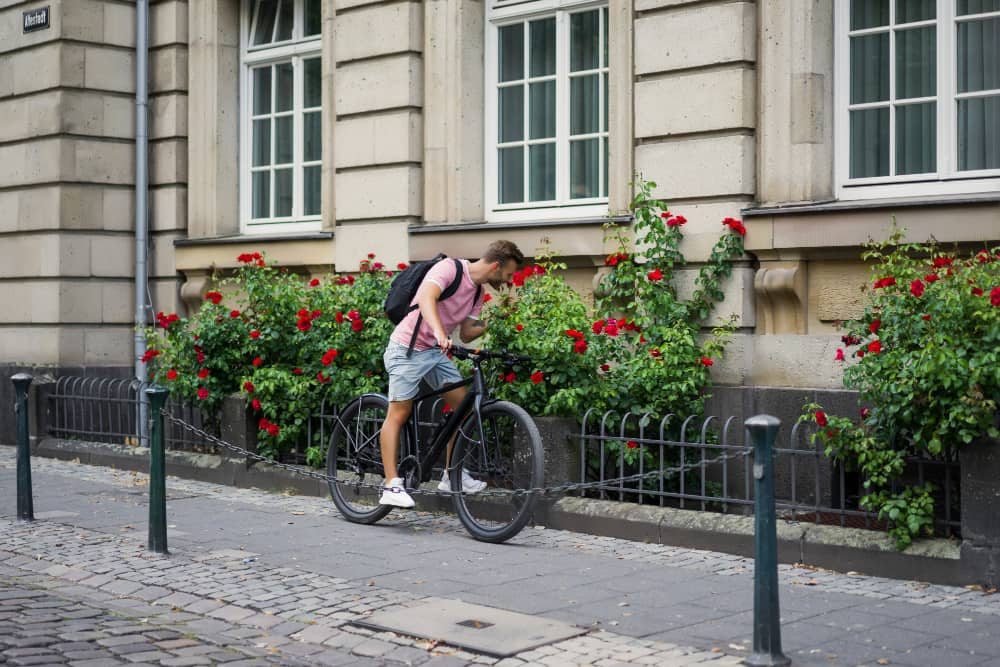
Cities are changing. Fewer cars, more peaceful public spaces, and an increasing emphasis on active transportation. In this context, bicycle infrastructure is becoming a real tool for local authorities: racks, shelters, terminals, inflation stations… These facilities are no longer mere details, but key elements in a coherent urban development project.
But they still need to be properly integrated, right from the design phase. Here are the keys to successfully integrating them and ensuring smooth, visible, and sustainable use for all cyclists.
?️ Think of bicycle furniture as a component of public space
Table of contents
ToggleToo often, bicycle furniture is installed as an afterthought , like a technical addition. However, for it to be effective, it must be planned from the outset , integrated into traffic flows, parking areas and intermodal points.
Concretely, this means:
- Study the cycle paths before placing the furniture,
- Install supports near the entrances to public buildings, transport stops, catchment areas,
- Ensure thePMR accessibility, to path widths, to cohabitation with pedestrians.
A bike rack , for example, is not just a simple metal support. It's an anchor point for everyday journeys. If poorly placed, it becomes invisible or unusable. If well-designed, it facilitates cycling as a natural mode of transportation.
? Adapt the furniture to the technical and aesthetic constraints of the site
Each neighborhood, each street, each square has its own specific characteristics: density, type of public, architecture, maintenance constraints… Bicycle furniture must therefore integrate both technically and visually into its environment.
Some good practices:
- Choose durable materials (powder coated steel, stainless steel, treated wood, etc.) adapted to the local climate,
- Plan models modular, easy to maintain or move in the event of work,
- Select a design sober but identifiable, which respects the framework while clearly indicating its function.
At Vélo Galaxie, all our equipment — from simple bike racks to multifunctional furniture — is designed to adapt to the city, not the other way around. Thanks to careful, durable, and adaptable design, it integrates seamlessly into both modern and heritage settings.
? Create an enriched, useful and coherent cycle route
The goal isn't to simply install a few supports here and there. It's to create a genuine cycling ecosystem in public spaces. Bike furniture then becomes a service link , integrated into a complete route.
This may include:
- The secure bike racks at each key stage of the journey,
- The inflation or repair stations at important crossroads,
- The covered or closed shelters in long-term parking areas,
- The Charging points to VAE in residential or multimodal hubs.
To facilitate use, clear signage and up-to-date maps are essential. Useful furniture is furniture that is identified, visible, and accessible.
Integrating bicycle infrastructure into an urban redevelopment plan is not simply a matter of choosing a few items from a catalogue. It is a comprehensive approach , where each element contributes to making the city more fluid, safer, and more welcoming for cyclists.
By anticipating needs, adapting furniture to its context, and thinking about use before design, communities can transform their streets into veritable testing grounds for sustainable mobility.
At Vélo Galaxie , we support this transition with concrete, adaptable solutions designed to last. Because a well-placed bike rack can sometimes make all the difference… between a casual cyclist and a loyal user.